
Humanoid Robots in 2026: A Business Deployment Guide
Humanoid robots are moving beyond demos into limited factory and warehouse work, but they aren't general-purpose worker replacements. Figure reported that Figure 02 loaded more than 90,000 sheet-metal parts during an 11-month BMW deployment that ended in November 2025.

How humanoid robots work, and where businesses use them
Cameras and sensors detect objects, obstacles, and body position. AI models interpret that information and help plan actions, while actuators move joints. Control software coordinates balance, movement, and gripping.
This combination of robotics and artificial intelligence depends on the task, surroundings, and human oversight. AI-powered robots still need defined operating limits.
Applications of humanoid robots in factories and warehouses
Current humanoid robot business use cases focus on repetitive physical work: loading parts, moving totes, and feeding components.
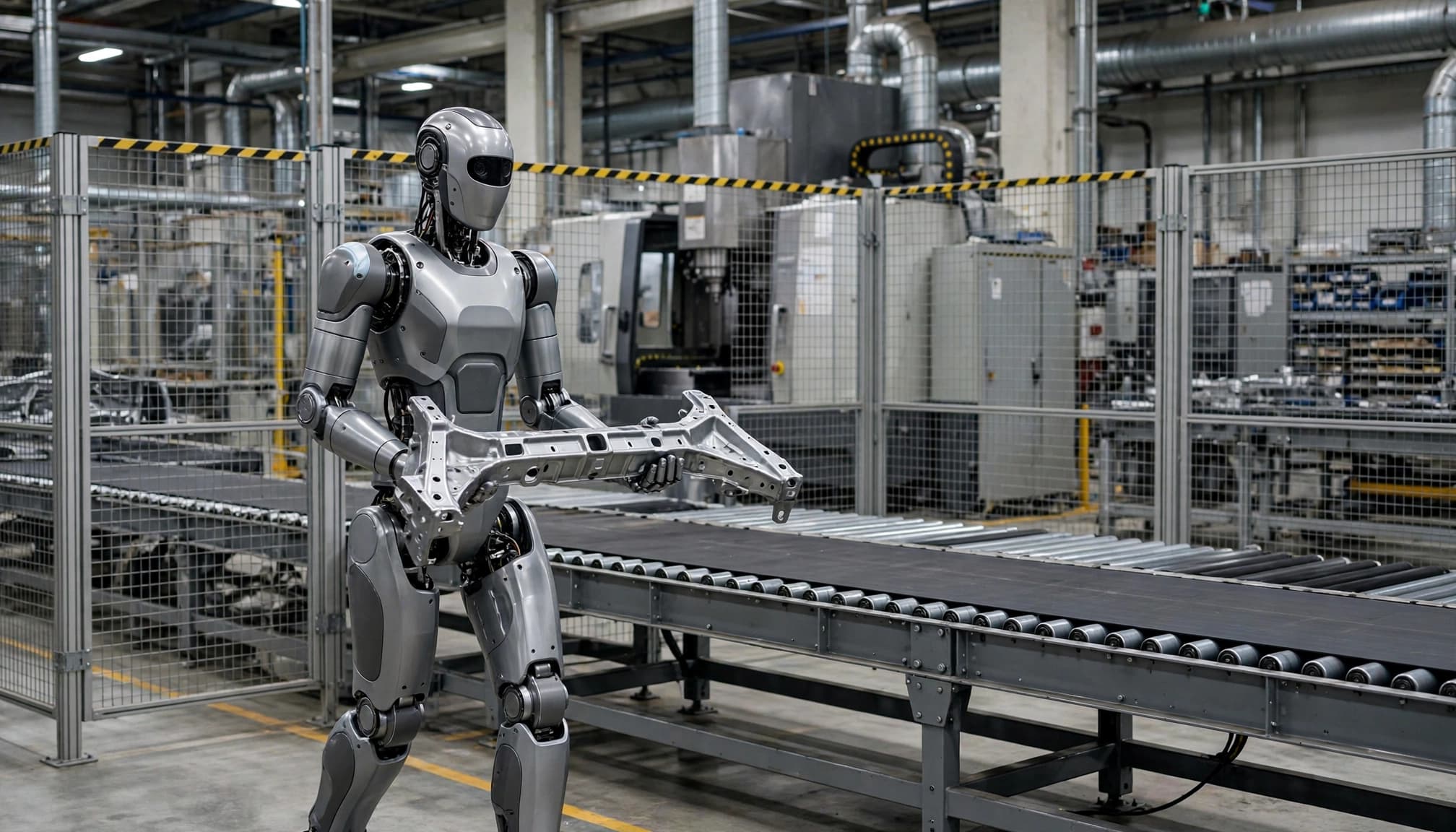
At BMW Group Plant Spartanburg, Figure 02 reportedly loaded sheet-metal parts onto welding fixtures. Industrial robots performed the welding. Figure reported more than 1,250 operating hours during the completed program, but didn't publish an uptime percentage.
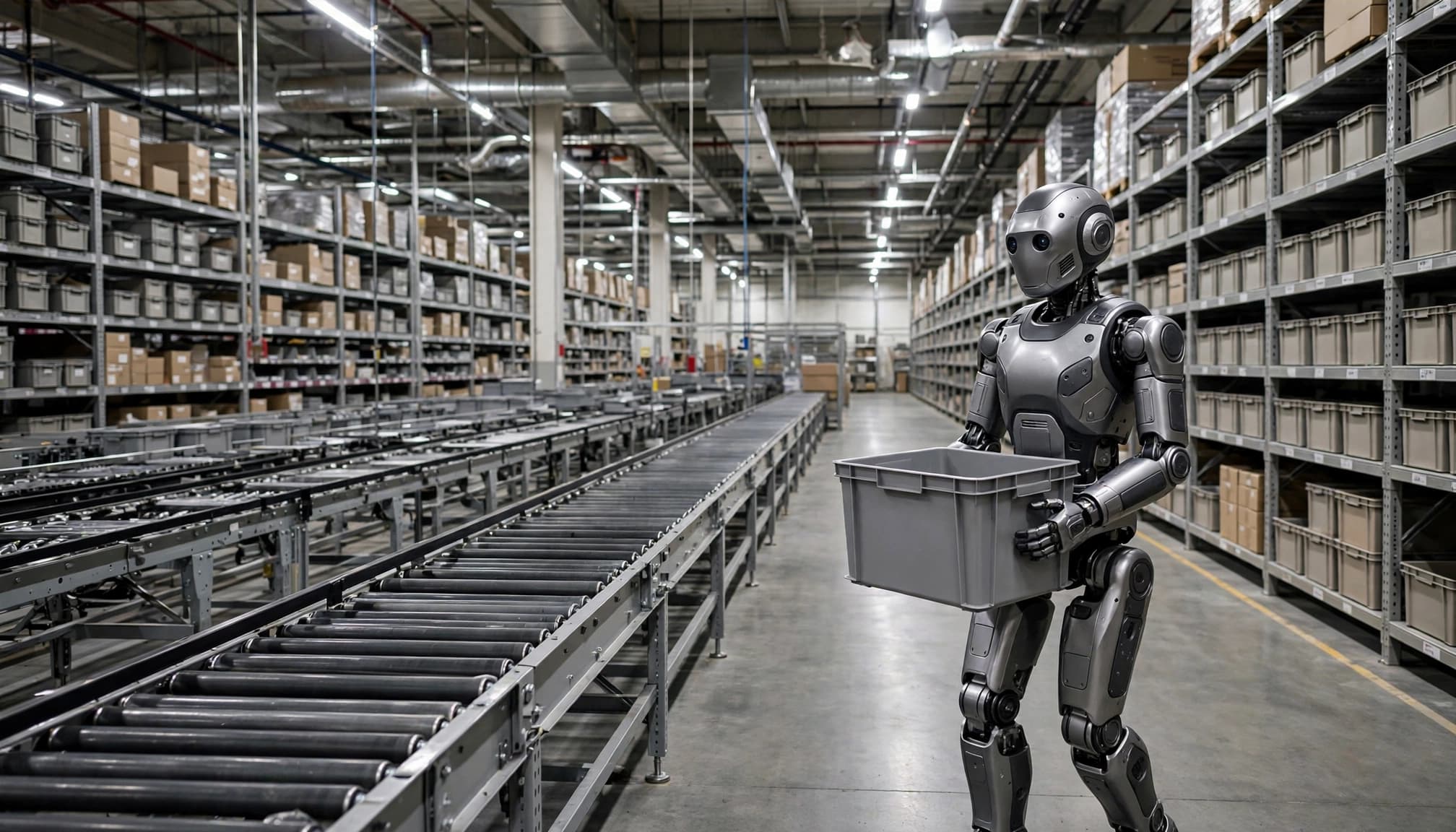
Meanwhile, Agility Robotics reported that Digit had moved over 100,000 totes at GXO's SPANX facility in Flowery Branch, Georgia, by November 2025. Neither milestone proves broad job replacement.
What current deployments can, and cannot, prove
GXO confirmed a multi-year commercial Robots-as-a-Service agreement with Agility in June 2024, following a pilot. By contrast, Mercedes-Benz announced testing of Apptronik's Apollo in March 2025, not scaled deployment.
A pilot tests feasibility; internal use supports a vendor's own operations. Paid commercial work provides a different level of evidence, while an order pipeline describes potential business.
When evaluating humanoid robots for business, request customer confirmation, operating hours, uptime, interventions, and task output. Demos, shipments, and orders don't establish sustained performance.
Benefits of humanoid robots, alongside deployment challenges
Where humanoid robots may add value at work
A human-shaped machine may fit aisles, workstations, and equipment already designed for people. That could limit layout changes, although each site still needs an integration review.
Potential humanoid robot benefits include reducing workers' exposure to strenuous lifting and repetitive handling. Reliable operation could also support consistent material flow.
However, compare industrial humanoid robots with fixed automation, mobile robots, and the current human-led process. A fixed arm may suit a stationary loading task better. Benefits depend on the workflow, not the robot's appearance.
Safety, reliability, and cost questions buyers must answer
Humanoid robots in the workplace require site-specific risk reviews. Buyers must assess operation near people, emergency stops, and safe recovery after errors or falls.
Also clarify maintenance responsibilities, battery charging or replacement, cybersecurity controls, and software access. Recovery procedures matter because a stalled robot can interrupt adjacent operations.
Comparable public unit prices and independently verified uptime data remain limited. Ask vendors for site-specific performance evidence, service terms, integration costs, and total cost per completed task. Include supervision and downtime instead of assuming labor savings.
A practical humanoid robot deployment guide for business
A humanoid robot implementation strategy should begin with one bounded workflow.
- Choose one repetitive task with stable inputs and measurable output. Tote transfer or part loading may be suitable candidates.
- Record the current cycle time, quality, staffing, and cost. Include rework so the baseline reflects actual performance.
- Map site conditions and safety risks. Check floor surfaces, aisle widths, lighting, human traffic, network access, and charging arrangements.
- Run a limited pilot with clear operating boundaries. Assign responsibility for supervision, emergency response, maintenance, and fault recovery.
- Compare results against agreed targets and simpler alternatives. Measure completed cycles, uptime, human interventions, recovery time, incidents, and cost per task.
- Scale only after sustained results across real shifts. Test normal variations in workload and inputs before expanding the robot's responsibilities.
Agree on acceptance criteria before installation, including conditions that pause or end the trial. Keep trained staff available until the operating evidence supports changes.
For structured learning, explore GalaxyonKnowledge's Humanoid Robot Deployment Masterclass. This AI and robotics course covers vendor evaluation, deployment planning, governance, and workforce communication.
Frequently Asked Questions
Are humanoid robots replacing workers in 2026?
Documented examples concern specific tasks rather than entire jobs. Workforce effects depend on the workplace, deployment scope, and how employers redistribute supervision, maintenance, and other responsibilities.
Which companies are deploying humanoid robots?
Examples include Agility Robotics' Digit at GXO and Figure AI's completed BMW deployment. Mercedes-Benz announced trials with Apptronik's Apollo, while UBTECH reported Walker S2 deliveries and orders; those claims don't confirm operating robots at every customer site.
How much does a business humanoid robot cost?
Leading industrial providers generally don't publish comparable prices. RaaS may reduce upfront spending, but buyers still need to include integration, support, maintenance, and downtime when comparing offers.
What is the best first task for a humanoid robot?
Choose repetitive, physically demanding work with stable inputs, clear safety controls, and measurable output, such as tote transfer or part loading. Avoid starting with tasks that require frequent judgment or handling unpredictable objects.
Expand only when the evidence holds
Humanoid robots show promise in carefully chosen factory and warehouse tasks, but capabilities vary and deployment isn't plug-and-play. Large task totals deserve attention without substituting for site-level evidence.
Build your pilot around safety and cost measures. Expand only when performance holds across real shifts, with acceptable intervention rates and dependable recovery procedures.